FLIERS- VOLANTES
REGISTRATION - REGISTRO
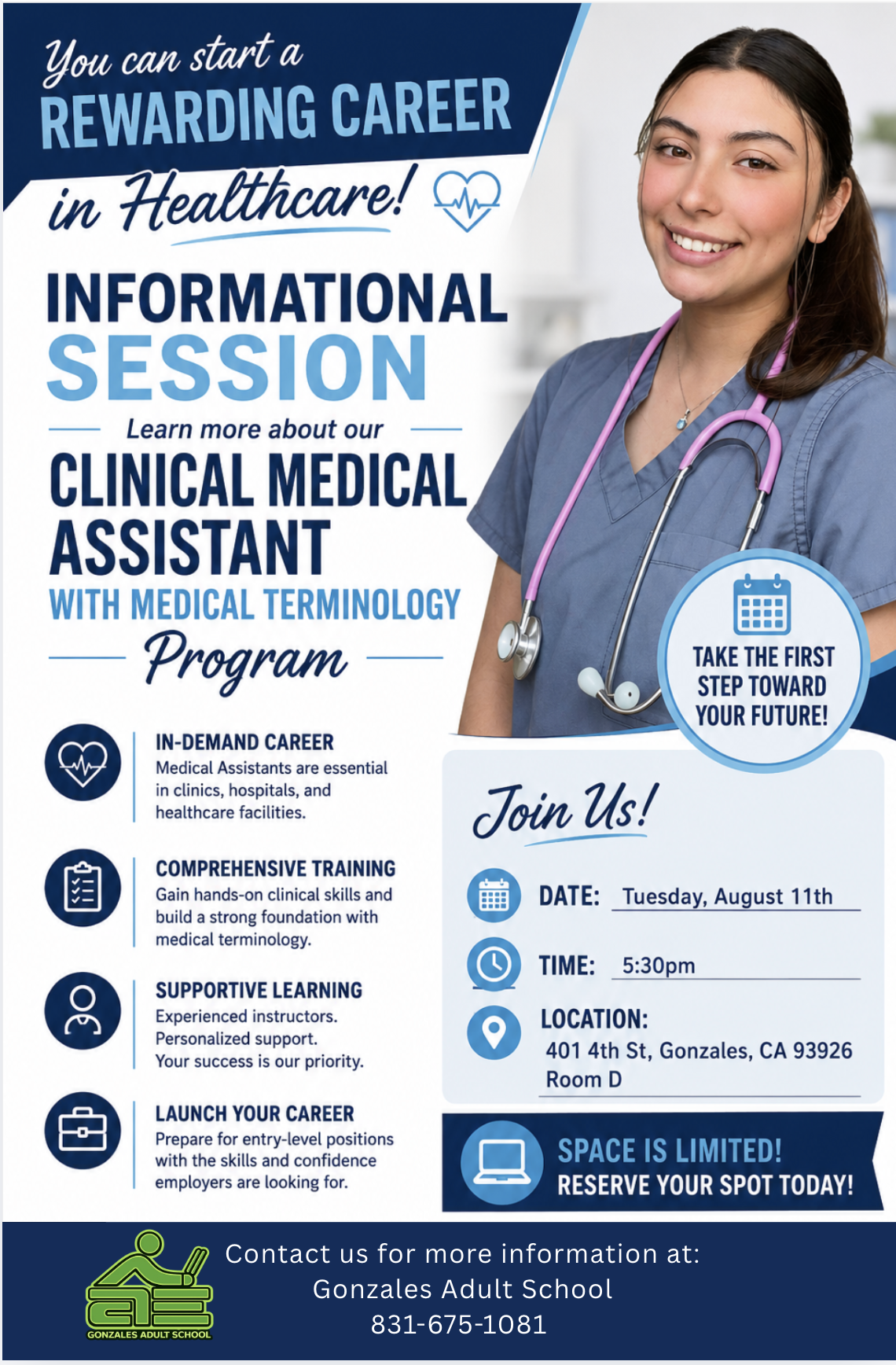
Clinical Medical Assistant
Program Description
Entry-Level (no healthcare knowledge required)
Course: 16 weeks plus externship hours
The Clinical Medical Assisting in-person certification course from Gonzales Adult School is designed to prepare students to function as professionals in multiple healthcare settings. Medical assistants with a clinical background perform various clinical tasks, including assisting with the administration of medications and with minor procedures, performing an electrocardiogram (EKG), obtaining laboratory specimens for testing, educating patients, and other related tasks. Job opportunities are prevalent with physician’s offices, clinics, hospitals, and outpatient facilities.
Course Curriculum:
This program will provide the necessary training and skills required to take the National Healthcare Association (NHA) Certified Clinical Medical Assistant (CCMA) national
examination. This 120-hour program includes classroom (lecture and labs) and 40 hours of externship. Students will need to complete classroom requirements to be eligible for the NHA exam and to participate in the externship.
This program will provide the necessary training and skills required to take the National Healthcare Association (NHA) Certified Clinical Medical Assistant (CCMA) national
examination. This 120-hour program includes classroom (lecture and labs) and 40 hours of externship. Students will need to complete classroom requirements to be eligible for the NHA exam and to participate in the externship.
After completing this program, learners will be able to:
● Explain the clinical medical assistant's role in patient-centered care within the medical facility
● Describe the specific personal characteristics, interpersonal communications, and professional skills required of the clinical medical assistant
● Demonstrate an understanding of medical facility safety practices, measures, plans, and standards
● Explain the steps in quality care throughout the patient encounter including preparation of the medical facility, completing required paperwork, taking vital signs, and completing the check-out tasks
● Demonstrate knowledge and skills related to pharmacology and the administration of medications within the scope of the clinical medical assistant practice
● Explain the concepts related to medical asepsis and surgical asepsis in the healthcare environment
● Explain the medical assistant's role and tasks when helping with minor surgery and diagnostic testing procedures in the medical office, including laboratory procedures,
specimen collection, microscopic assessment, and hematology procedures
● Demonstrate the ability to assist the physician as directed in various medical specialties of the medical office
● Explain considerations of healthcare for special populations, including pediatrics and geriatrics
● Apply the basic electrophysiologic principles of cardiac conduction to the anatomy and physiology of the body
● Explain the clinical medical assistant's role in patient-centered care within the medical facility
● Describe the specific personal characteristics, interpersonal communications, and professional skills required of the clinical medical assistant
● Demonstrate an understanding of medical facility safety practices, measures, plans, and standards
● Explain the steps in quality care throughout the patient encounter including preparation of the medical facility, completing required paperwork, taking vital signs, and completing the check-out tasks
● Demonstrate knowledge and skills related to pharmacology and the administration of medications within the scope of the clinical medical assistant practice
● Explain the concepts related to medical asepsis and surgical asepsis in the healthcare environment
● Explain the medical assistant's role and tasks when helping with minor surgery and diagnostic testing procedures in the medical office, including laboratory procedures,
specimen collection, microscopic assessment, and hematology procedures
● Demonstrate the ability to assist the physician as directed in various medical specialties of the medical office
● Explain considerations of healthcare for special populations, including pediatrics and geriatrics
● Apply the basic electrophysiologic principles of cardiac conduction to the anatomy and physiology of the body
● Identify proper placement of leads to ensure an accurate and consistent EKG reading
● Evaluate various EKG rhythm strips following established normal criteria for each of the waiver forms and intervals
● Analyze a variety of EKG rhythm strips, identifying rate, rhythm, and intervals
● Analyze a variety of EKG rhythm strips for common dysrhythmias
● Apply an understanding of the technical aspects of the EKG machine to the correct use of the machine and interpretation of artifacts
● Describe the functions, associated terminology, types, and rhythm strips of pacemakers
● Describe diagnostic electrocardiography in terms of goals, types, procedures, indications, and contraindications
● Explain how to interpret a 12-lead EKG strip
● Explain the steps in selected specimen collection procedures performed by the phlebotomy technician
● Explain the safety procedures in the healthcare setting, and specifically in performing specimen collection procedures
● Identify specific supplies and equipment used in selected specimen collection procedures
● Explain precautions and guidelines when collecting specimens in special populations such as pediatrics and geriatrics
● Define quality of care and explain the impact on patient medical care when quality and safety is compromised in phlebotomy procedures
● Describe the anatomy, physiology, pathophysiology, and medical terminology associated with phlebotomy
● Describe the requirements of a successful phlebotomy career, including desired character traits, training and education, roles and responsibilities
● Explain how CMAs communicate with others in the healthcare setting verbally, nonverbally, within the health record, and using computer systems
● Identify common legal issues, ethical issues, and regulatory issues commonly impacting the CMA.
● Evaluate various EKG rhythm strips following established normal criteria for each of the waiver forms and intervals
● Analyze a variety of EKG rhythm strips, identifying rate, rhythm, and intervals
● Analyze a variety of EKG rhythm strips for common dysrhythmias
● Apply an understanding of the technical aspects of the EKG machine to the correct use of the machine and interpretation of artifacts
● Describe the functions, associated terminology, types, and rhythm strips of pacemakers
● Describe diagnostic electrocardiography in terms of goals, types, procedures, indications, and contraindications
● Explain how to interpret a 12-lead EKG strip
● Explain the steps in selected specimen collection procedures performed by the phlebotomy technician
● Explain the safety procedures in the healthcare setting, and specifically in performing specimen collection procedures
● Identify specific supplies and equipment used in selected specimen collection procedures
● Explain precautions and guidelines when collecting specimens in special populations such as pediatrics and geriatrics
● Define quality of care and explain the impact on patient medical care when quality and safety is compromised in phlebotomy procedures
● Describe the anatomy, physiology, pathophysiology, and medical terminology associated with phlebotomy
● Describe the requirements of a successful phlebotomy career, including desired character traits, training and education, roles and responsibilities
● Explain how CMAs communicate with others in the healthcare setting verbally, nonverbally, within the health record, and using computer systems
● Identify common legal issues, ethical issues, and regulatory issues commonly impacting the CMA.
Certification Opportunities
After completing this program, learners will have the option to take the leading
national/industry-recognized certification exams.
https://www.nhanow.com/certification/nha-certifications/certified-clinical-medical-assistant-
ma)
After completing this program, learners will have the option to take the leading
national/industry-recognized certification exams.
https://www.nhanow.com/certification/nha-certifications/certified-clinical-medical-assistant-
ma)
Admission Requirements:
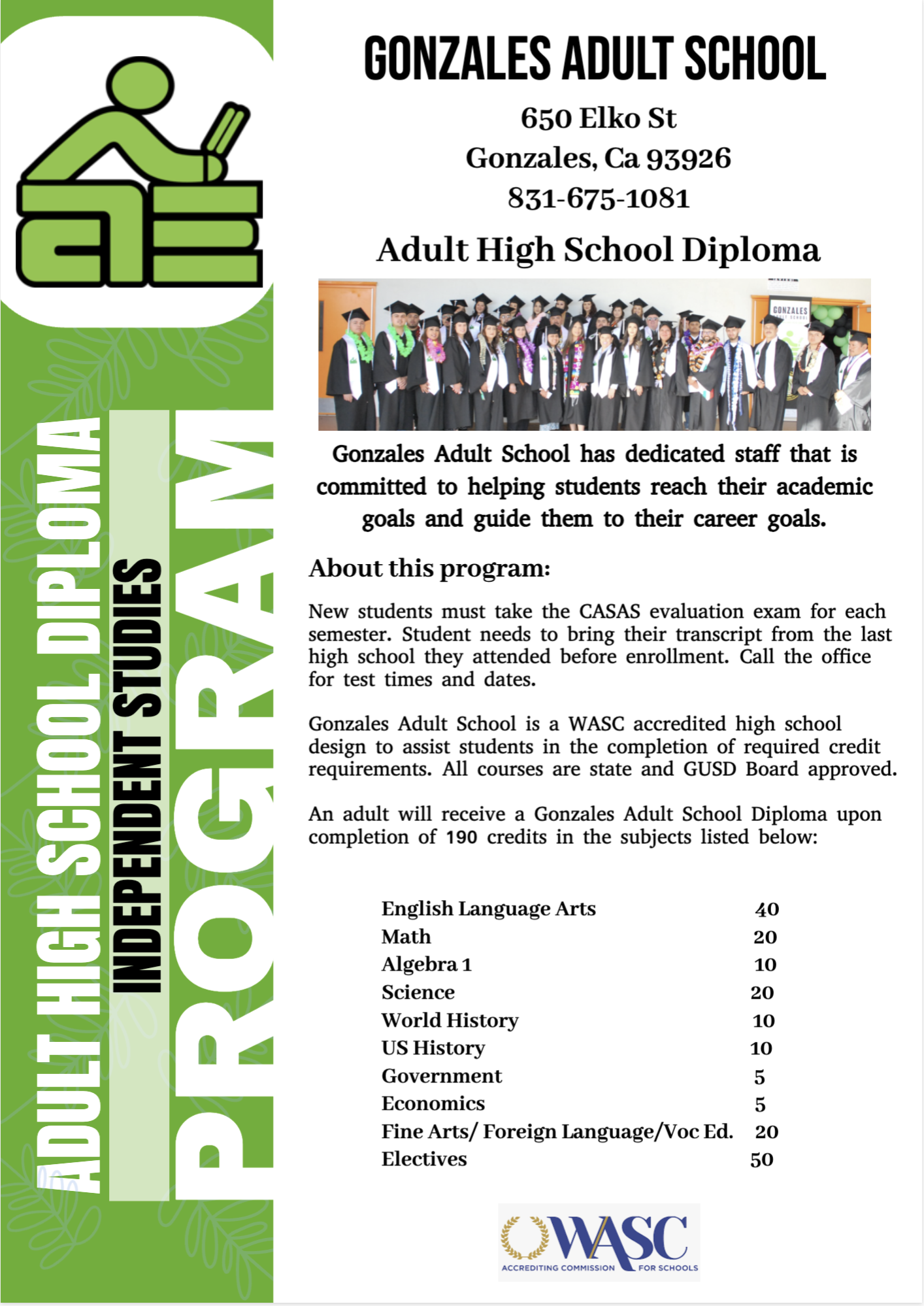
- Must possess a high school diploma or GED/HiSET to enroll.
- Take an English placement test and score above a 230
- Must co-enroll in our Medical Terminology course
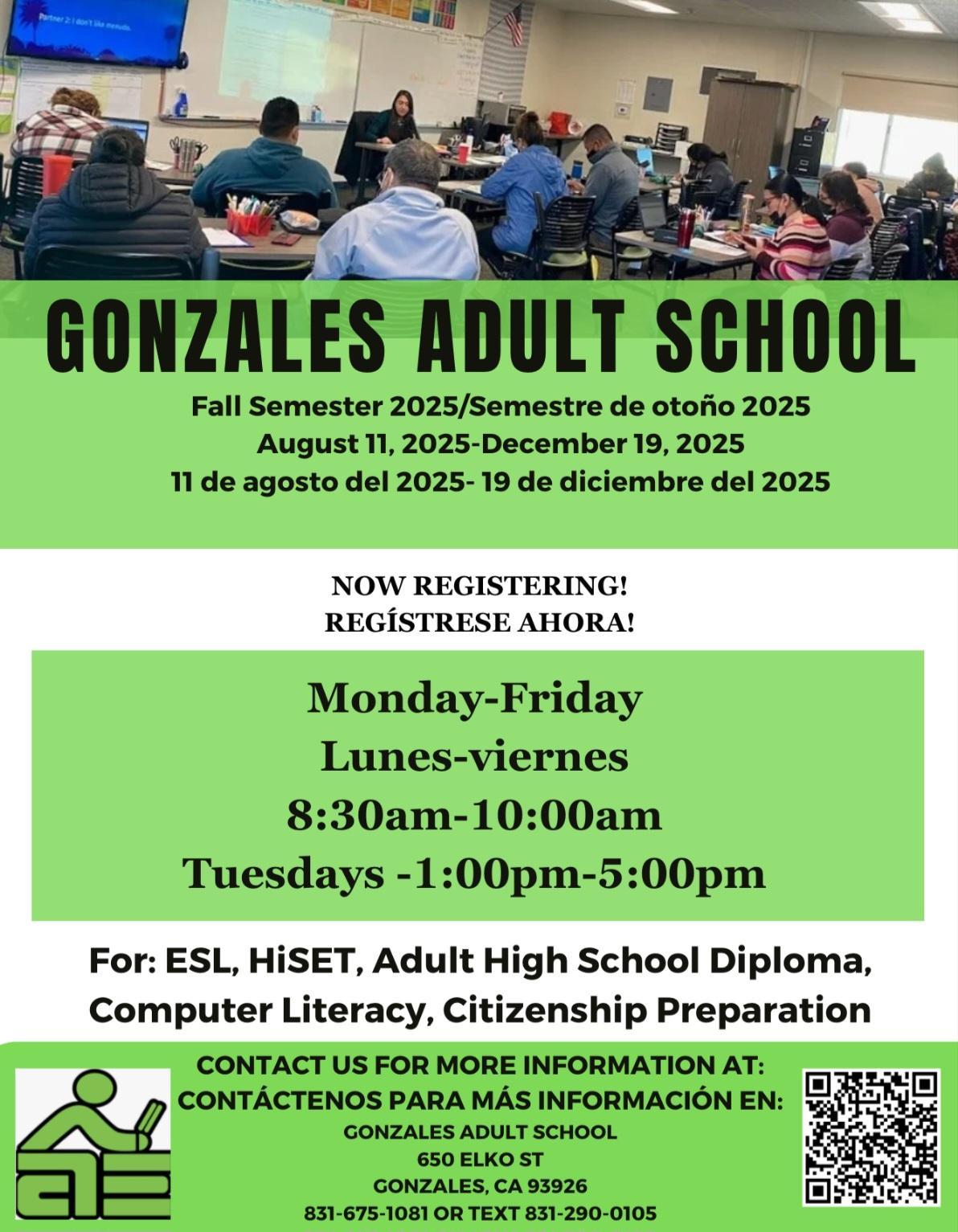
- For fee information and start dates, please refer to the flier